
- Use the right equipment: A quality French press, burr grinder, and proper kettle make a significant difference in flavor.
- Choose fresh, high-quality beans: Medium to dark roast, single-origin or blends, ground just before brewing for optimal taste.
- Grind size and ratios matter: Coarse grind and a coffee-to-water ratio of 1:15–1:17 ensure smooth, bold extraction.
- Control water temperature: Ideal brewing temperature is 195–205°F (90–96°C); preheat the French press for consistency.
- Follow the proper brewing steps: Bloom, pour slowly, stir gently, steep 4–5 minutes, press slowly, and serve immediately.
- Adjust and enhance flavor: Modify steeping time, grind, or ratios, and consider pre-infusion, stirring, or adding subtle spices for depth.
- Maintain and store properly: Clean the French press thoroughly after each use and store beans in an airtight container in a cool, dark place.
There’s something magical about a perfectly brewed cup of French press coffee. The rich aroma, full-bodied flavor, and smooth texture make it a favorite among coffee enthusiasts. But achieving that flawless cup isn’t always straightforward. Whether you’re a beginner or someone who’s tried French press brewing before, this guide will walk you through everything you need to know to make French press coffee for a smooth, bold flavor every time.
Why Choose a French Press Over Other Brewing Methods?
Coffee brewing can be overwhelming with all the options out there: drip coffee makers, espresso machines, AeroPress, pour-over setups. So why should you choose a French press?
- Full-bodied flavor: Unlike drip coffee, a French press allows coffee grounds to steep fully, extracting rich oils and flavors.
- No paper filters: Paper filters can absorb essential oils that contribute to the coffee’s bold taste. The metal mesh of a French press lets those oils shine through.
- Control over every step: You decide the grind size, steeping time, and water temperature, giving you ultimate control over your cup.
- Simple to use: No complicated machines, buttons, or electricity needed—just coffee, hot water, and a French press.
If you’ve ever wondered how to make French press coffee taste as bold as your favorite café brew, understanding the method is key.
What Equipment Do You Need for French Press Coffee?
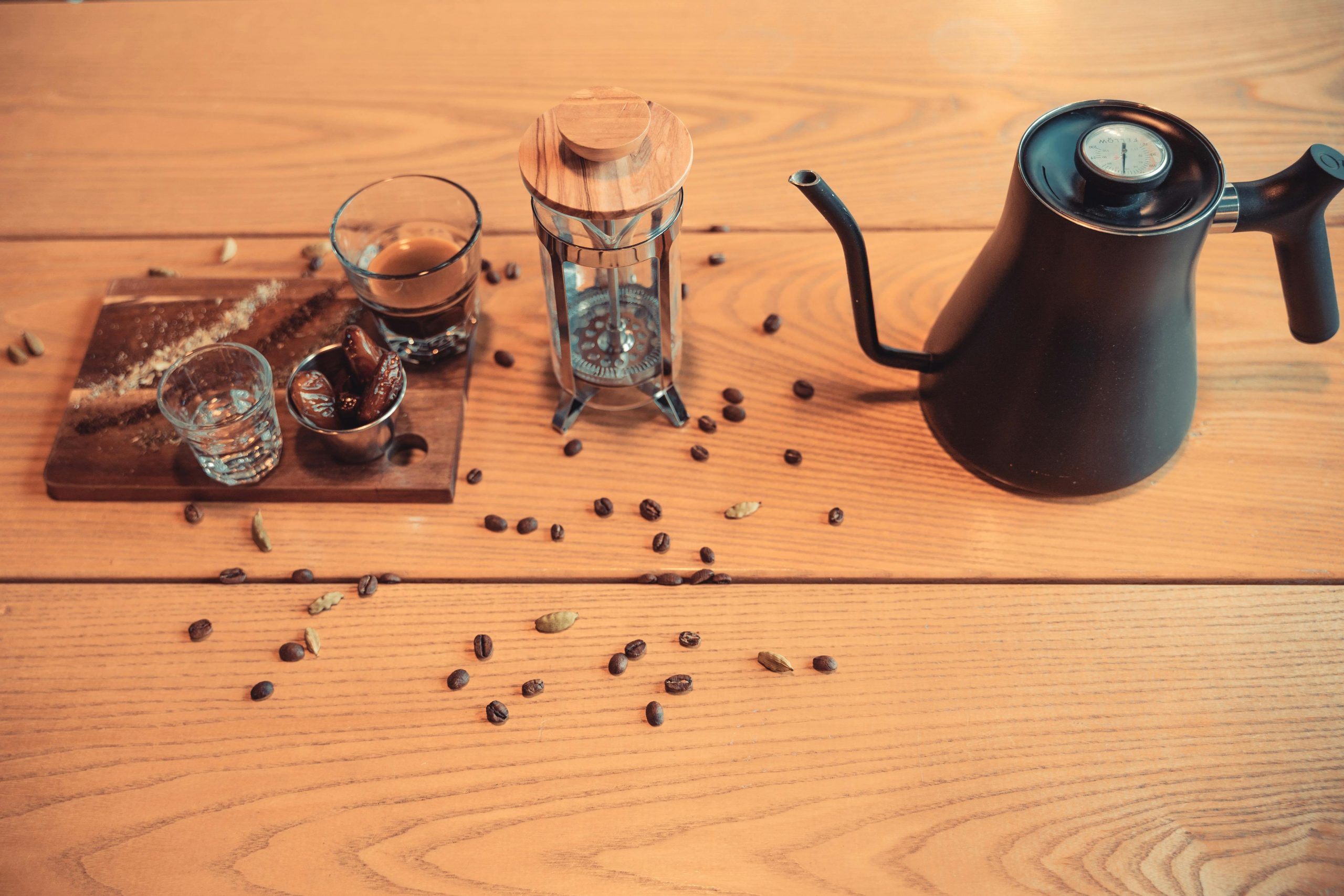
Before diving into the brewing process, you’ll need the right tools. Using subpar equipment can make even the best coffee beans taste flat.
Essentials:
- French press: Available in glass, stainless steel, or ceramic. Each material affects heat retention and taste slightly.
- Coffee grinder: Burr grinders are preferred over blade grinders for consistent grind size.
- Kettle: A gooseneck kettle gives better control over pouring, but any kettle will work.
- Scale: Ensures the correct coffee-to-water ratio.
- Timer: Helps with consistent steeping times.
Optional tools like a thermometer can help ensure your water is at the perfect temperature for extraction.
What’s the Best French Press for Smooth, Bold Coffee?
Choosing the right French press can make a big difference in your brewing experience and the flavor of your coffee. Not all French presses are created equal, and a few key features can enhance your cup.
What to Look For:
- Material: Stainless steel keeps coffee hotter for longer, while glass allows you to watch the brewing process. Ceramic presses retain heat well and often have a stylish design.
- Filter quality: Look for a fine mesh plunger to minimize grounds in your cup. Multi-layer filters provide a cleaner, smoother brew.
- Size: French presses range from single-serve to 8-cup or larger. Choose one that fits your household’s needs.
- Ease of cleaning: Removable parts and dishwasher-safe components make maintenance simple.
Popular Options:
- Bodum Chambord: Classic design, durable, available in multiple sizes. Great for beginners and seasoned brewers alike.
- Frieling Double-Walled Stainless Steel: Excellent heat retention and a sturdy build for bold, consistent coffee.
- Espro P7: Features a patented micro-filter for an exceptionally clean cup with minimal sediment.
- Secura French Press: Affordable, stainless steel, and built to last. Ideal for daily use without breaking the bank.
Tip:
Investing in a quality French press is worth it. A well-built press not only improves flavor but also lasts for years, making it a smart choice for coffee lovers.
What Coffee Beans Should You Use?
The flavor of your French press coffee starts with the beans. You want fresh, high-quality coffee that suits your taste preferences.
Bean Selection Tips:
- Single-origin vs. blends: Single-origin beans highlight unique flavor profiles, while blends often create a more balanced cup.
- Roast level: Medium to dark roasts work best for French press coffee because they produce a fuller, bolder taste. Light roasts can be used but may taste more acidic.
- Freshness matters: Coffee is best used within two to four weeks of roasting. Avoid pre-ground coffee if possible.
Remember, experimentation is key. Try different beans to find your preferred flavor profile.
How Should You Grind Your Coffee?
Grind size is crucial when making French press coffee. Too fine, and your coffee becomes bitter and over-extracted. Too coarse, and it will be weak and under-extracted.
Recommended Grind:
- Coarse grind, roughly the size of sea salt.
- Even consistency is essential to avoid uneven extraction.
Grinding Tips:
- Grind just before brewing to preserve freshness and aroma.
- Use a burr grinder for the most consistent results.
- Avoid blade grinders—they produce uneven particle sizes, which can lead to a muddy or weak brew.
What’s the Ideal Coffee-to-Water Ratio?
Getting the coffee-to-water ratio right ensures a smooth, bold flavor without being overpowering.
- Standard ratio: 1:15–1:17 (1 gram of coffee per 15–17 grams of water).
- For example: For a 32-ounce (1-liter) French press, use about 55–60 grams of coffee.
If you prefer stronger coffee, slightly increase the coffee amount, but don’t exceed 1:14, or it may become bitter.
How to Heat the Water Properly
Water temperature plays a critical role in extraction. Too hot, and your coffee can taste burnt; too cold, and it will taste weak and flat.
- Ideal temperature: 195–205°F (90–96°C).
- If you don’t have a thermometer, boil water and let it sit for about 30 seconds before pouring.
Pro tip: Preheat your French press with hot water to maintain the temperature during brewing.
How to Make French Press Coffee Step by Step
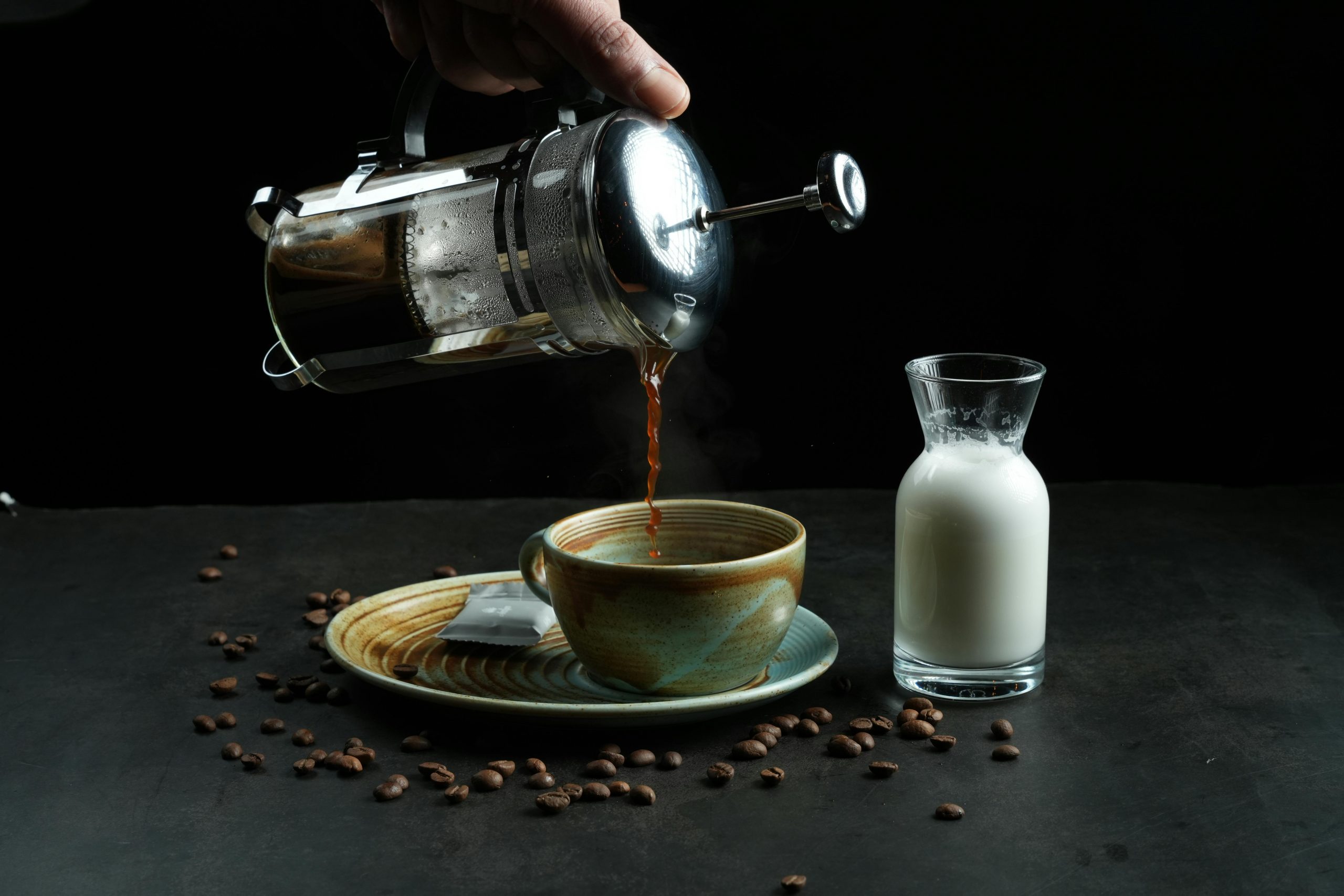
Now that you have your equipment, fresh beans, the right grind, and properly heated water, it’s time to brew a cup of French press coffee that’s smooth, bold, and full of flavor. Follow these steps carefully to get the best results.
Step 1: Add Coffee Grounds
Measure out your coarse coffee grounds according to your desired coffee-to-water ratio. A general starting point is about 1 gram of coffee per 15–17 grams of water. Add the grounds to the French press and spread them evenly across the bottom. Even distribution helps ensure that all grounds are properly saturated during brewing, leading to uniform extraction and avoiding weak spots or overly bitter areas in your cup.
Step 2: Pour Hot Water
Begin by pouring a small amount of hot water over the coffee grounds—just enough to saturate them. Allow the coffee to “bloom” for 30–45 seconds. Blooming releases carbon dioxide trapped in the beans, which can otherwise lead to uneven extraction and a flat taste.
After the bloom, pour the remaining water slowly and steadily in a circular motion to ensure all grounds are fully saturated. Pouring slowly also helps maintain the ideal water temperature for optimal extraction. For larger French presses, pour in stages to avoid splashing and to give the coffee grounds time to absorb the water evenly.
Step 3: Stir Gently
After pouring all the water, use a wooden or plastic spoon to gently stir the coffee. Stirring breaks up clumps and ensures that all the grounds are submerged, which helps achieve a more balanced and smooth flavor. Avoid using metal spoons, as they can scratch the glass or stainless steel of your French press. A gentle stir is all it takes—no vigorous mixing needed.
Step 4: Steep
Place the lid on the French press with the plunger pulled all the way up. Let the coffee steep undisturbed for about 4 minutes for a standard brew. If you prefer a stronger, bolder cup, you can extend steeping time to 5 minutes. Keep in mind that longer steeping extracts more flavor but can also bring out more bitterness if overdone. The goal is to balance strength with smoothness.
Step 5: Press Slowly
Once the steeping time is complete, press the plunger down slowly and evenly. Pressing too quickly can agitate the grounds and allow sediment to escape into your cup, leading to a gritty texture. Aim for a smooth, consistent downward motion. If your French press has a tight seal, you may need to apply gentle pressure, but avoid forcing it.
Step 6: Serve Immediately
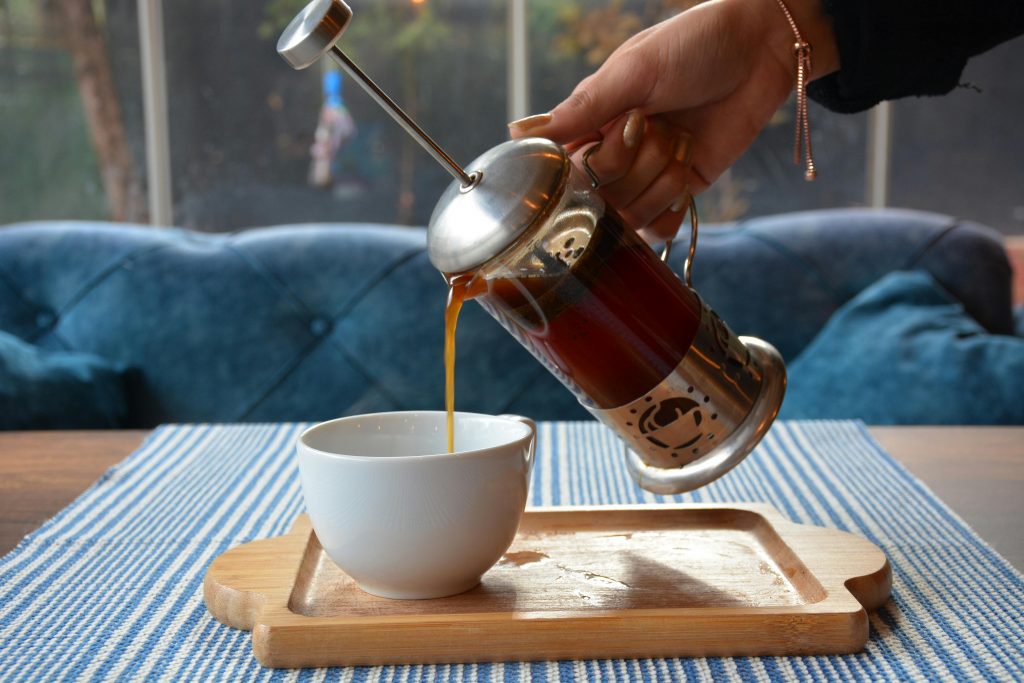
Pour your freshly brewed coffee into your cup immediately. Leaving coffee in the French press with the grounds can cause over-extraction, making it taste bitter and overly strong. If you’re brewing for multiple people, transfer the coffee into a separate carafe to maintain flavor without over-steeping. Enjoy it hot and savor the rich aroma, full body, and bold taste you’ve just crafted.
How Can You Adjust for Taste?
Even with perfect technique, small adjustments can enhance your cup.
- Too bitter? Try a slightly coarser grind or reduce steeping time.
- Too weak? Use a finer grind or increase coffee quantity.
- Too acidic? Use slightly cooler water or a darker roast.
Experimenting with these variables allows you to find the perfect balance for your taste.
Can You Make Iced French Press Coffee?
Yes! French press coffee works beautifully for iced coffee.
Steps for Iced French Press Coffee:
- Brew coffee as usual, but slightly stronger to account for melting ice.
- Pour over ice immediately.
- Add milk, cream, or sweetener if desired.
This method preserves the coffee’s smooth, bold flavor even when chilled.
How to Clean and Maintain Your French Press
Keeping your French press clean is essential for consistent flavor. Coffee oils and residue can build up and make future brews taste rancid.
- Disassemble the French press and rinse all parts with warm water.
- Use mild soap and a soft brush to clean the mesh filter.
- For a deeper clean, occasionally soak parts in a mixture of water and baking soda.
- Avoid harsh detergents or abrasive scrubbers.
Common Mistakes to Avoid
Even small mistakes can ruin your French press coffee. Here are some pitfalls to watch out for:
- Using water that’s too hot or cold.
- Using a fine grind instead of coarse.
- Over-steeping or under-steeping the coffee.
- Leaving coffee in the press too long.
- Not preheating the French press.
Avoiding these mistakes helps ensure your coffee is always smooth, bold, and delicious.
Tips for Enhancing Flavor
If you’re aiming for French press coffee with consistently smooth, bold flavor, a few simple tweaks can make a world of difference. These tips go beyond the basics and help you bring out the best in your coffee.
Pre-infusion: Let Your Coffee Bloom
Before pouring in all your water, add a small amount to saturate the coffee grounds and let them bloom for 30–45 seconds. This releases trapped carbon dioxide from the beans, which can otherwise cause uneven extraction. Blooming helps unlock deeper flavors and aromas, giving your cup a richer, more balanced taste.
Stir Halfway Through Steeping
Even with a proper grind, coffee grounds can sometimes clump together, leading to uneven extraction. Gently stir the coffee halfway through the steeping process. This ensures all grounds are fully immersed and extracts evenly, resulting in a smoother, more consistent cup.
Use Freshly Ground Beans
Freshness is key to flavor. Coffee starts losing its aromatic oils as soon as it’s ground. For the best results, grind your beans just before brewing. This preserves the natural oils and complex flavor notes, giving your French press coffee a vibrant, bold profile.
Experiment with Ratios
The standard coffee-to-water ratio is a great starting point, but don’t be afraid to adjust it to suit your taste. Slightly increasing the amount of coffee can intensify flavor, while slightly decreasing it can create a milder, smoother cup. Keep notes of your adjustments so you can consistently replicate the perfect brew.
Add Spices or Flavor Twists
French press coffee provides a robust base that pairs well with subtle spices. A pinch of cinnamon, cardamom, or nutmeg added to the grounds before brewing can add warmth and complexity. For a unique twist, try adding a few drops of vanilla extract or a small piece of orange peel—just enough to enhance, not overpower, the natural coffee flavor.
Bonus Tip: Control Your Water Quality
Believe it or not, the water you use can significantly impact your coffee’s flavor. Use filtered water if possible, and make sure it’s at the right temperature (195–205°F or 90–96°C). Too hot, and you risk bitterness; too cool, and the coffee may taste weak and flat. Good water equals great coffee.
How to Store Coffee Beans for Maximum Freshness
Even the best brewing technique won’t save stale beans. Proper storage keeps your coffee fresh and flavorful.
- Keep beans in an airtight container.
- Store in a cool, dark place away from heat and sunlight.
- Avoid the fridge or freezer for daily use—it can introduce moisture.
- Only grind what you need for each brew.
Fresh beans make every cup noticeably smoother and bolder.
Frequently Asked Questions
How long can French press coffee sit before it gets bitter?
Coffee should be served immediately. Leaving it in the French press for more than 10–15 minutes will lead to over-extraction and bitterness.
Can I use pre-ground coffee?
Yes, but freshly ground coffee is strongly recommended for optimal flavor. Pre-ground coffee loses its aromatic oils faster.
Can I use a French press for other drinks?
Absolutely! You can froth milk, brew loose-leaf tea, or even make cold brew using a French press.
Is French press coffee stronger than drip coffee?
Generally, yes. The longer steeping and full immersion method extract more oils and flavors, giving a bolder taste.
Final Thoughts
Making French press coffee for a smooth, bold flavor every time is both an art and a science. By choosing the right beans, grinding properly, controlling water temperature, and following a careful brewing process, you can consistently enjoy café-quality coffee at home. Remember, practice and experimentation are key—your perfect cup is just a few adjustments away.
French press coffee isn’t just about caffeine; it’s about savoring the process, the aroma, and the taste of each cup. With these tips, you’ll never settle for mediocre coffee again.